
what munich’s scooters taught me about rural colorado’s ev future
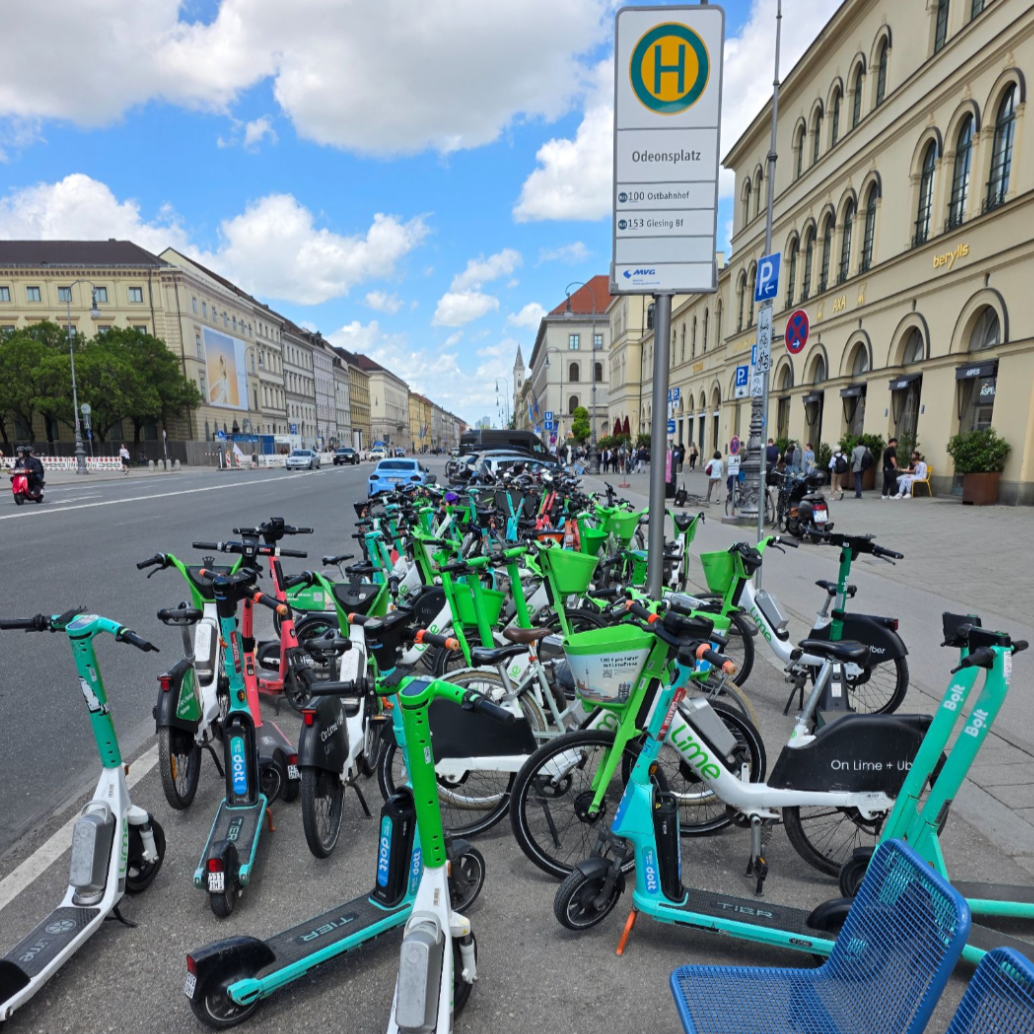
There is a storied plaza in Munich called Odeonsplatz. It’s a place where Bavarian royal ambition, Nazi mythmaking, and postwar remembrance collide. But on a recent afternoon in June, while on vacation, the most visible collision I saw was of the neon greens, chirpy teals, and assertive reds of competing micromobility providers’ electric scooters and bikes. Up close, it was chaos. Proof that no matter where you go, the transition to zero-emissions transportation is messy. But zoomed out, it spoke to a certain enforced order – they were all piled into an approved pick-up/drop-off zone – and to Munich’s evolution into a modern, forward-thinking city that treats clean mobility as infrastructure, not aspiration. That messiness stuck with me. Not because I spent five weeks studying how Germany, Austria, and Italy move people - I was on vacation, after all - but because certain scenes were too different from home to ignore. (The contrast was real, but so is the temptation to overstate it.)
A shared skepticism
Colorado is not Bavaria. Over here, we like our trucks. Pickups, SUVs, and crossovers made up 90.7% of new vehicle registrations in the state through the first half of 2026, up from 88.4% a year earlier, according to the Colorado Automobile Dealers Association. Meanwhile, our clean-vehicle market has taken a beating. Registrations of fully electric vehicles (BEVs) fell 55.3% over the same period as incentives shrank, helping drag the overall new-vehicle market down 15.4% – more than double the national decline. This collapse can be traced to the expiration of the $7,500 federal tax credit on Sept. 30 and the cut in Colorado's own base credit, to $750 from $3,500, on Jan. 1, compounded by tariffs and a gas-price spike tied to the war in Iran. That's one kind of friction: aggregate, economic, driven largely by policy. There's a second kind, too, more visceral, and it shows up on both sides of the Atlantic. Munich police report hundreds of alcohol-related e-scooter offenses every year at Oktoberfest, and in France, cleanup crews have pulled more than 100 of them out of the river in Lyon. Self-driving shuttles draw their own resistance: In San Francisco, people have disabled autonomous vehicles simply by setting traffic cones on their hoods, and researchers have documented pedestrians stepping in front of them just to see whether they will stop. The difference is not that Europe lacks vandals or skeptics – it is that Europe has kept building anyway. This made me wonder what practices, models, and ideas are actually transferable to Southwest Colorado. The answer is: More than you might think.
Right-sized vehicles for right-sized trips
One of the more charming things I saw all summer was the Citroën Ami, a 2-seat electric quadricycle just under 8 feet long, buzzing around town at a max speed of 28 mph. You can’t buy them in the U.S. since they don’t meet federal crash standards, but the category they represent already exists in Colorado.
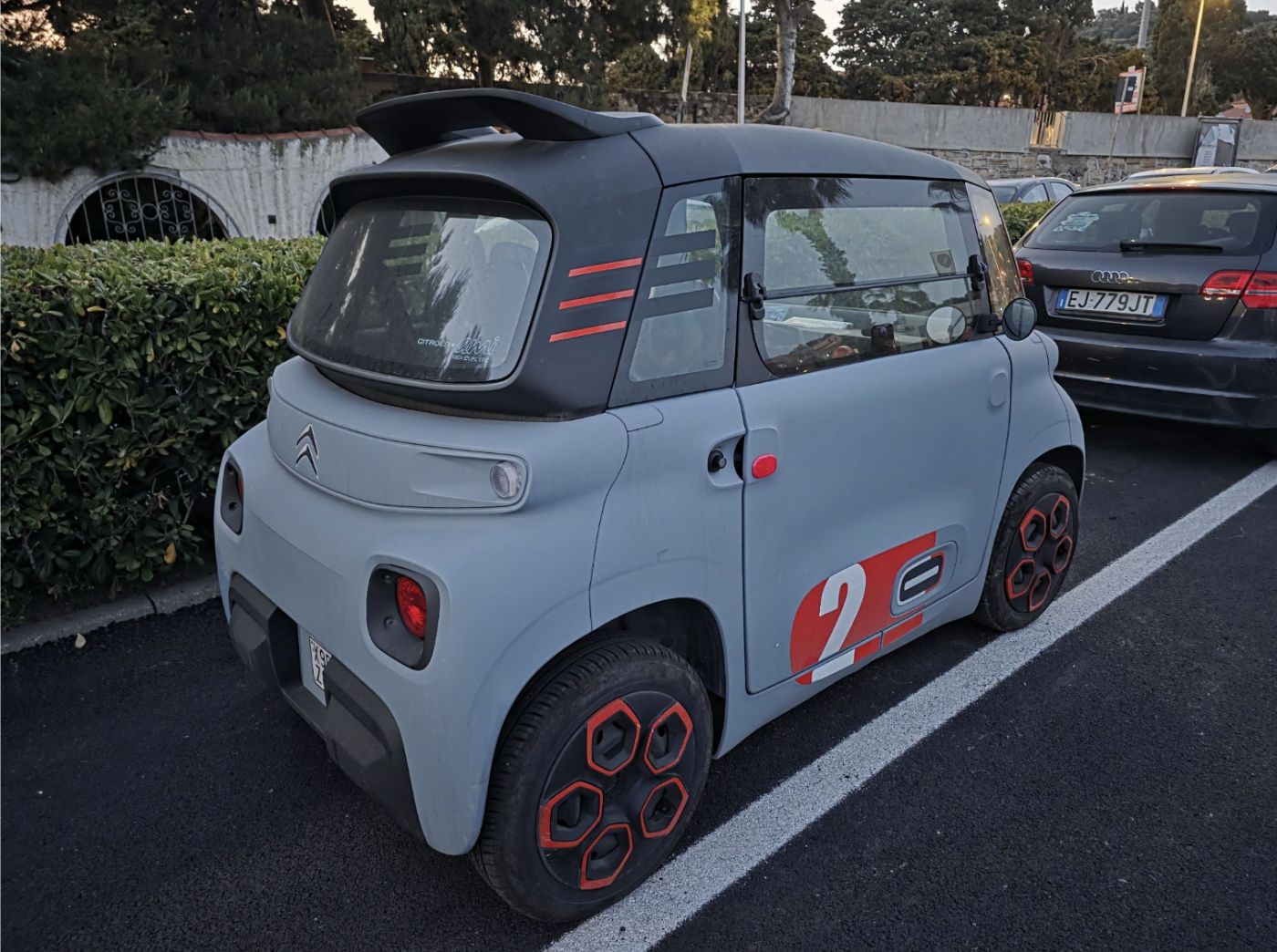
“Neighborhood electric vehicles” are street-legal on lower-speed roads under state law, and they can already be spotted in mountain towns like Breckenridge, Telluride, and Steamboat Springs. The lesson is not "import this French car." It is that a purpose-built, low-speed EV is a legitimate second vehicle for short local trips, and the rules already accommodate it. In Imperia, a small city on the Ligurian coast, I also saw driverless electric shuttles waiting to ferry visitors along the waterfront. It is easy to file this under "things European cities do," but Colorado has already run the same experiment. Denver’s Regional Transportation District launched the state's first on-road autonomous shuttle at Peña Station in 2019, and Colorado School of Mines ran a fleet of driverless electric shuttles in Golden from 2021 to 2022.
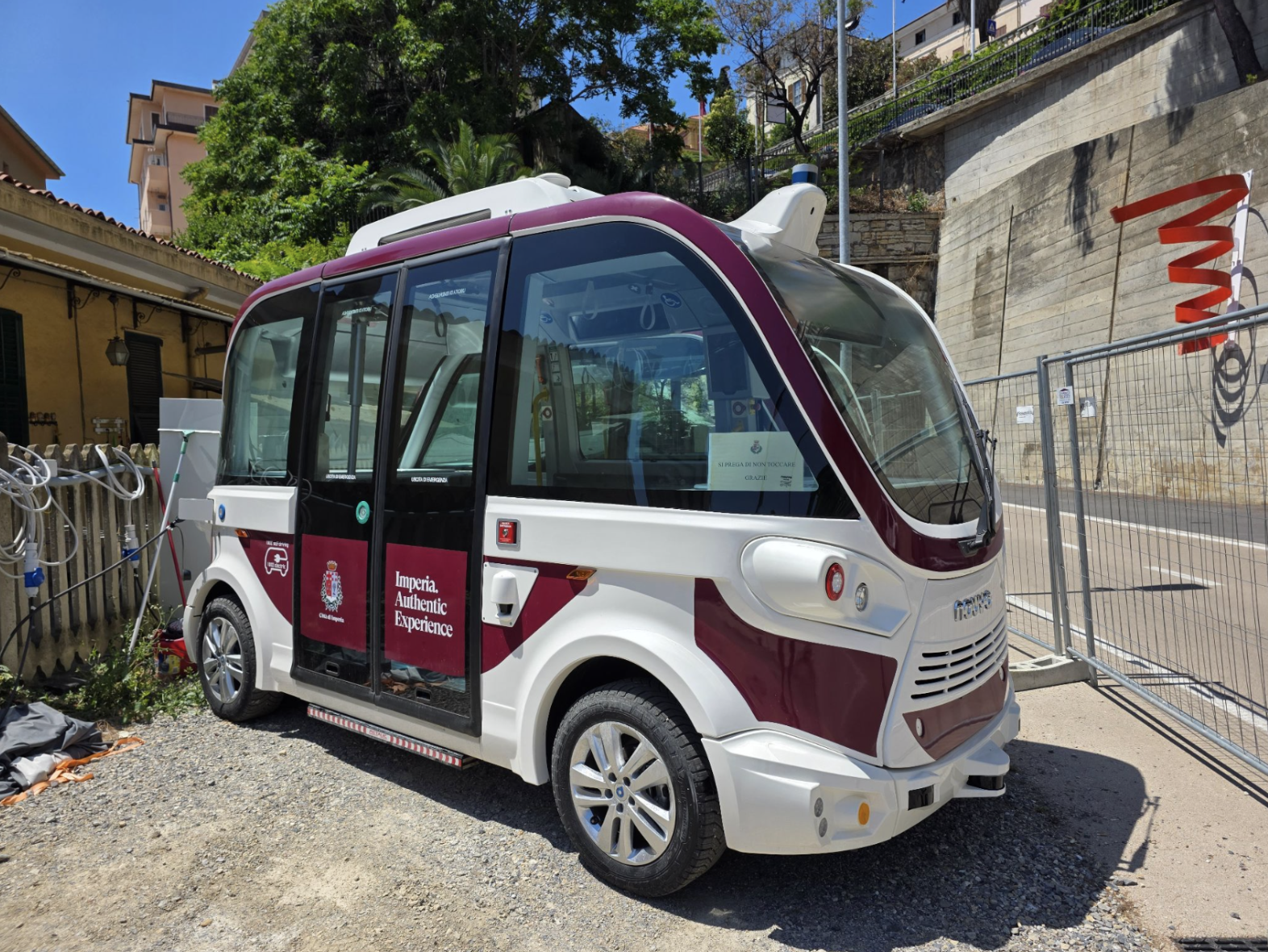
EasyMile, one of the sector's leading manufacturers, bases its North American operations in Denver. For a resort town or a river community weighing a downtown circulator or a last-mile link to transit, the useful question is not whether the technology works, but what those Colorado pilots already learned about cost, ridership, and public trust.
Charging built into infrastructure that already exists
The single biggest difference I felt was not the cars but the charging. On the Autobahn and the highways through Austria and Italy, DC fast chargers were simply part of the rest stop, slotted in beside the fuel pumps and the coffee. That’s no accident. One company, Tank & Rast, operates roughly 390 service areas covering about 90% of Germany's highway rest stops, and it built fast charging directly into that existing footprint. Charging there is now mature enough to fight over: A German court ruled in March that those charging concessions must be opened to competitive bidding rather than handed to the incumbent fuel operator. The takeaway for rural Colorado is not to build standalone charging plazas in the middle of nowhere, but to fold charging into the gas stations, travel centers, and trailheads that already anchor our highways and byways. None of this erases the gap. Europe has spent decades and serious public money turning clean mobility into ordinary infrastructure, and Colorado just watched its EV market contract as the supports fell away. But that colorful jumble of rubber, metal, and lithium ion at Odeonsplatz is a reminder that the messy, chaotic-looking early days are not a reason to wait. They are what the beginning looks like. At 4CORE, helping Southwest Colorado communities figure out what fits – a neighborhood EV ordinance, a shuttle pilot, a charger at the right trailhead – is exactly the work we do through ReCharge Colorado. If your town, tribe, or business is weighing a clean-transportation project, reach out. The beginning doesn’t have to be tidy. It just has to start.
