
Money on the table
What businesses and organizations need to know about solar incentives
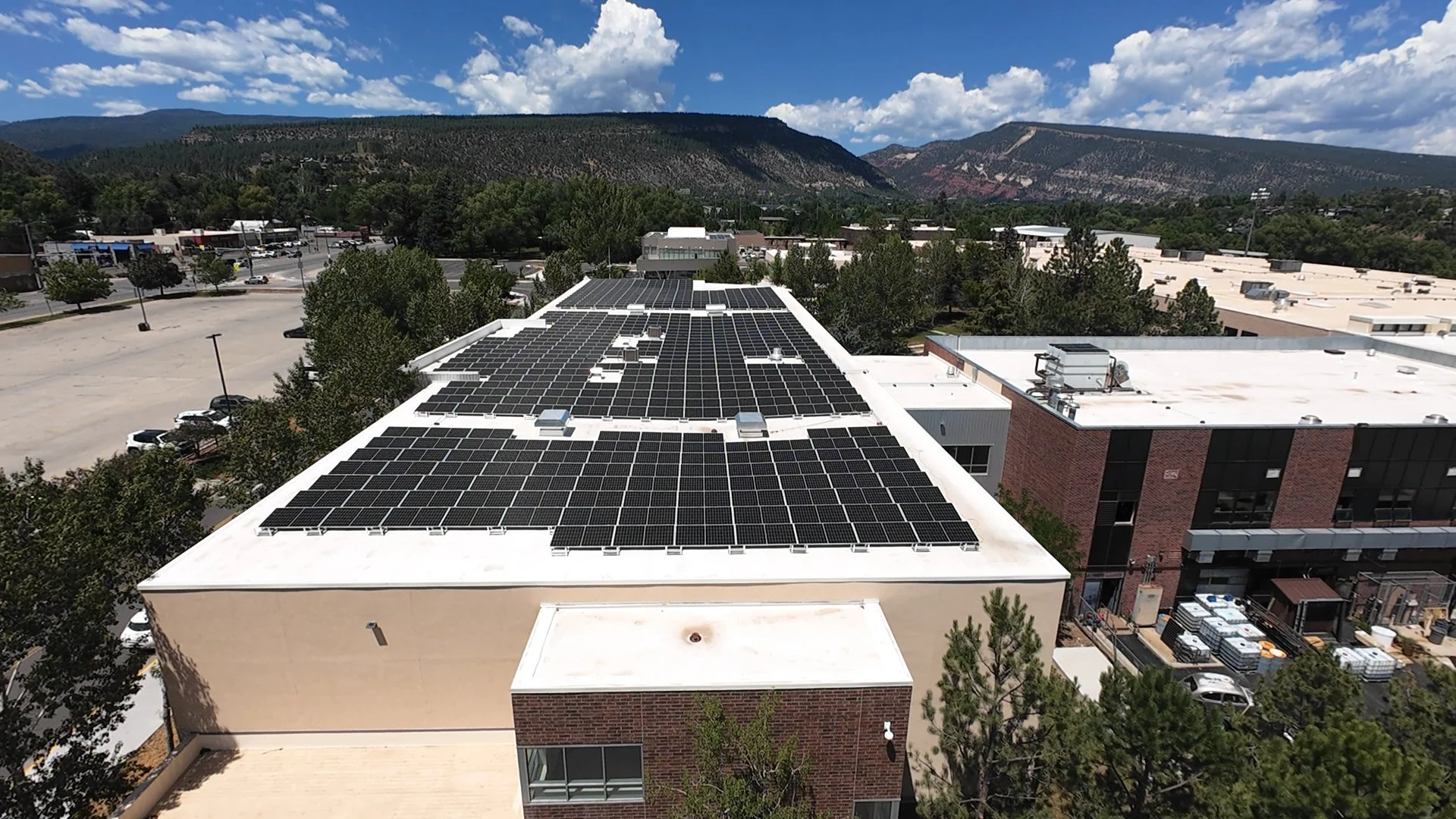
Solar panels on Durango High School
There’s a big renewable energy opportunity right now that most businesses, nonprofits and public entities don’t know about.
While it’s true that federal residential solar tax credits expired at the end of 2025, commercial and tax-exempt entities – think businesses, churches, hospitals, school districts, government and tribal entities – can still get a minimum of a 30% tax credit, up to 70% for projects that qualify for all bonuses. Tax-exempt organizations that can’t use a tax credit can instead receive a direct cash payment of equivalent value through the Inflation Reduction Act’s Direct Pay option. That’s a huge incentive that could save organizations significant utility costs for decades. But projects do need to get started soon.
Now is the time to get quotes and crunch the numbers. Projects that begin construction by July 4 have until the end of 2030 to be completed. For smaller installations under 1.5 megawatts, committing just 5% of costs counts as getting started. Missing that deadline means projects must be completed by the end of 2027. Both paths are still doable.
No upfront capital? You may have more options than you think. LPEA’s On-Bill Financing program, in partnership with First Southwest Bank, provides low-interest loans conveniently repaid through your monthly electric bill – up to $60,000, with larger business loans available case-by-case. It covers a broad range of projects beyond solar, including energy storage, heat pumps, LED lighting and even insulation. The Colorado Clean Energy Fund, a nonprofit green bank, offers another avenue with long-term financing up to 15 years at below-market rates for businesses and tax-exempt organizations. For organizations that prefer no debt at all, a Power Purchase Agreement lets a third-party developer own and operate the system while you simply buy the electricity at a fixed rate lower than what you’d otherwise pay.
Solar works best in LPEA territory when you’re using what you generate – and commercial energy use is typically highest during daylight hours, making it a natural fit. Battery storage can further optimize savings.
The results are real. In 2024, Durango School District used an energy performance contract to improve energy efficiency and go solar across six campuses, projected to offset 58% of energy costs – budget neutral from Day One. The city of Durango is saving $200,000 annually from their 2023 project. The Powerhouse is installing a solar awning on its new early child care center that will lower energy bills and provide a shaded outdoor learning space. Southwest Health System in Cortez is installing a large battery storage system to trim peak demand charges.
There is real opportunity for other businesses and organizations in our region to do the same. While the window to lock in these opportunities is starting to close, there is still time. Start by reaching out to an LPEA-approved solar installer. These incentives can save your organization real money for decades to come.
Erika Brown is the Regional Energy Coach for 4CORE, serving La Plata and Archuleta counties. This blog originally appeared as a Durango Herald Column on April 24, 2026
