
Bye, Bye Range Anxiety
Three Bets on the Future of EV Charging
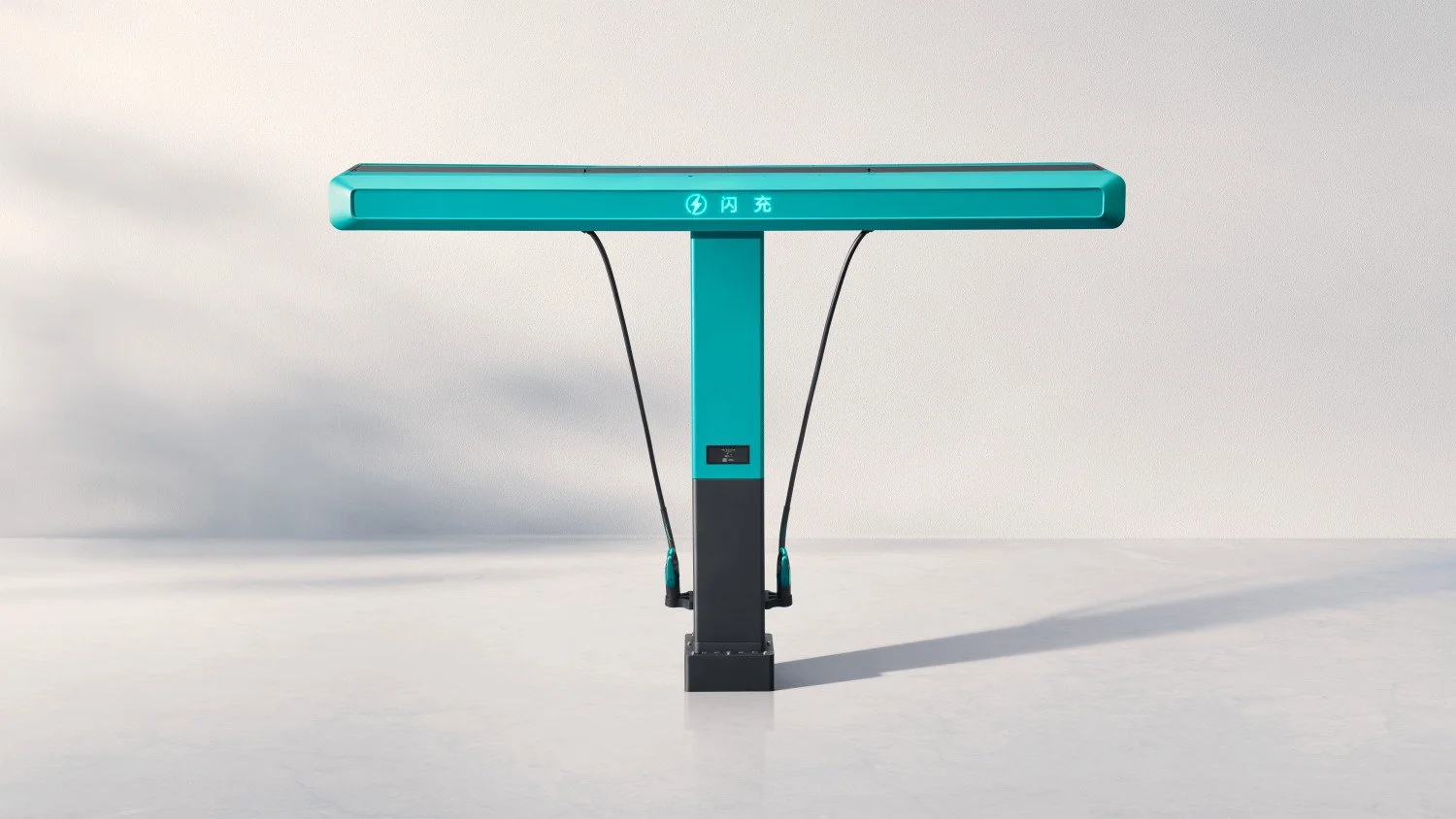
BYD Flash 2.0 charger
For years, the Holy Grail of EV charging has been the 5-minute refuel. Make recharging an EV battery as quick and easy as filling up a gas tank and range anxiety would be made obsolete.
Today, the engineering is largely settled.
China’s EV juggernaut BYD boasts chargers that can juice up a 1,000-volt battery from 10 to 70 percent in 5 minutes – and from 10 to 97 percent in nine. BYD’s logic? Make the stop so fast it barely counts.
Tesla’s and Ionna’s bets are different. One is trying to make the queue disappear before you even arrive, while the other wants to make waiting feel like something else entirely.
Pump Speed
In March of last year, the Chinese automaker demonstrated 1,000-kilowatt Flash chargers capable of adding 262 miles of range to its Han L sedan in five minutes - game-changing speed. A year later, BYD went even further. Second-generation Flash chargers now deliver 1,500 kilowatts – 1.5 megawatts – of peak power.
Paired with the new Blade 2.0 lithium-iron-phosphate battery, that means 10% to 97% in roughly nine minutes, and 20% to 97% in 12 minutes even at minus 22 degrees Fahrenheit. (Assuming it’ll snow again in Durango at some point, that’s a massive qualitative leap.)
About 4,200 Flash stations are already operating in China, with a target of 20,000 by year-end. U.S. tariffs and software security restrictions mean none of this is coming to Highway 550 anytime soon, but the Denza Z9GT – the model BYD used in its nine-minute demo – launched in Europe in April, with Flash chargers to follow.
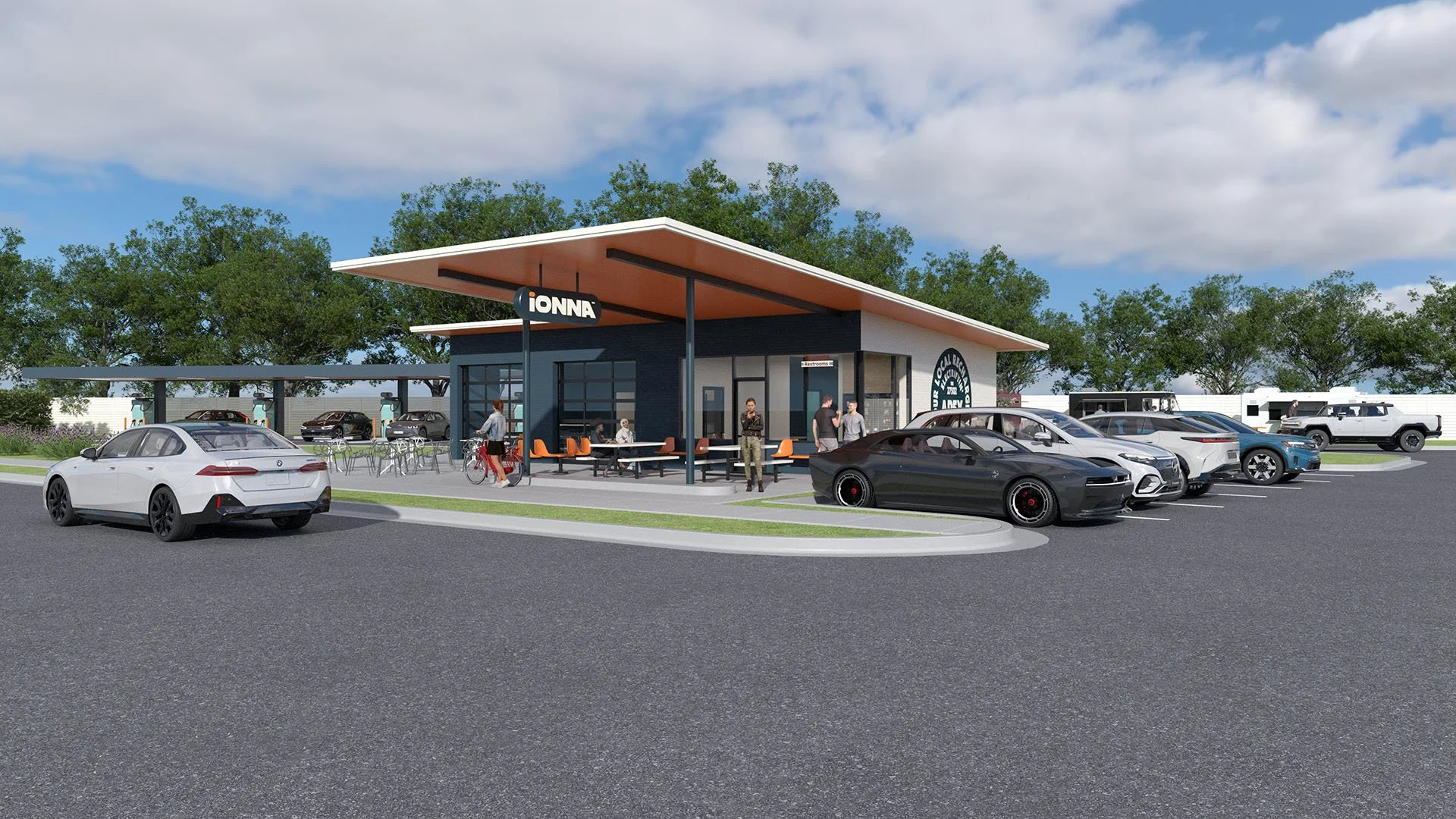
Ionna broke ground on their first Rechargery back in 2024.
No More Waiting
Tesla, for its part, isn’t trying to out-speed China with its Supercharger network – it's trying to eliminate the wait entirely.
A virtual queuing pilot, launched in June 2025, lets drivers join a digital waitlist via the app instead of circling the lot. Dynamic pricing, now live at more than 550 U.S. locations, nudges demand away from peak hours by adjusting rates in real time based on live stall utilization.
In April 2026, Tesla deployed a machine-learning model trained on 9 million miles of anonymized vehicle trajectory data to predict queue length within one or two cars. Tesla's Trip Planner also pre-conditions the battery while you're still driving, cutting cold-weather charging times by up to 25% before you ever plug in.
The result: in Q1 2026, only about 0.5% of Supercharger sessions involved any wait at all – a record low.
Closer to home, a new 8-stall Supercharger opened at Durango's Transit Center in November 2025, open to all EVs with CCS or NACS connectors at up to 325 kilowatts.
Sit Back and Relax
Ionna's bet is ambitious in its own right. The joint venture of eight automakers – BMW, GM, Honda, Hyundai, Kia, Mercedes-Benz, Stellantis, and Toyota – is building what it calls “Rechargeries”: charging stations with canopies, driver lounges, restrooms, refreshments, tire air, and security cameras.
The philosophy, as one founding executive put it, is that charging should not happen "in the backyard somewhere of a shopping center next to a dumpster."
Ionna now operates more than 100 locations across 30 states, with roughly 1,000 bays live and 4,700 more contracted, all supporting CCS and NACS at up to 400 kilowatts. In April, Ionna announced a partnership with Circle K to operate 85 existing sites and build 350+ more, with a goal of 30,000 bays nationwide by 2030.
The nearest locations to Durango are in Gallup, NM, about 125 miles south, and in Fruita, CO, about 140 miles north.
Three approaches, three different theories of how to solve the same problem. The charging experience is getting faster, smarter, and more comfortable all at once – and for drivers in southwestern Colorado, some of that is already being rolled out.
