
Your home, your power
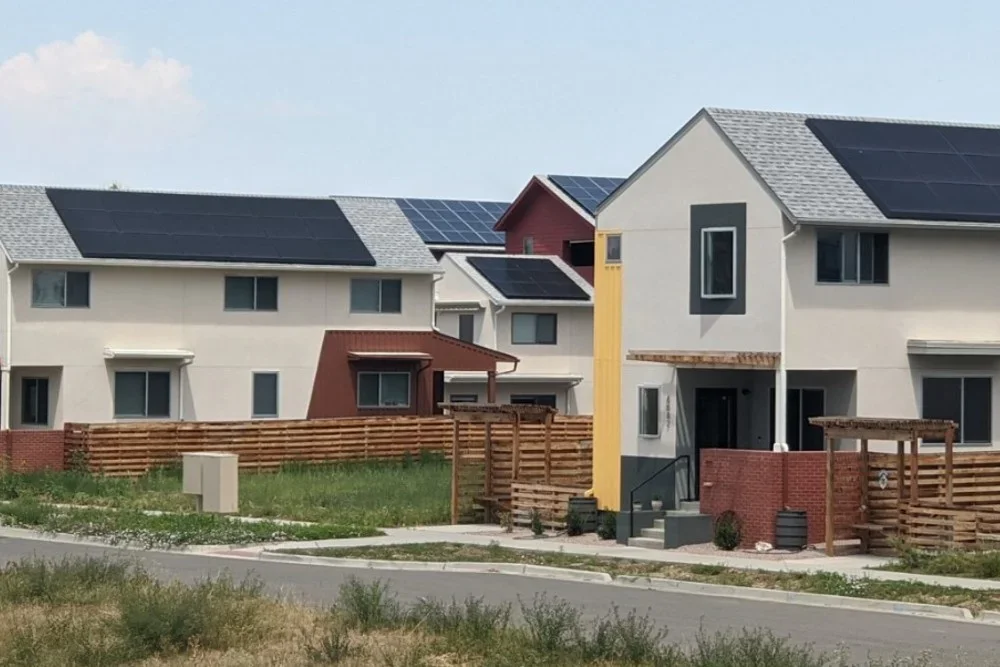
Modern homes with solar panels.
Building energy resilience in SW Colorado
Imagine a typical winter: temperatures dropped, a storm rolled in and your propane supplier can’t make it up your road. Or the bill arrives higher than you budgeted because prices spiked mid-winter, again. For many local households, this isn’t hypothetical.
The word “resilience” gets thrown around a lot, but it’s one of the most practical reasons to consider electrification – and one that resonates across the political spectrum. It’s about independence, and not being at the mercy of forces outside your control.
The propane problem
A significant portion of rural Southwest Colorado runs on propane, and propane has a vulnerability built in. It’s a globally traded commodity, meaning prices here can spike based on a cold snap in New England, an export surge or a war in Iran. Prices are reliably higher in winter, when demand peaks and delivery to mountainous, remote areas carries a premium. Unlike an electric bill, there’s no fixed rate and no warning before the price jumps.
With an electric heat pump, your electricity rate is set by La Plata Electric Association, a member-owned cooperative accountable to us, its customers. And with LPEA on a trajectory toward cleaner, more locally sourced energy, the electricity powering your home is increasingly generated locally – not trucked in.
What a resilient home looks like
Heat pumps keep you warm in winter and cool in summer without a fuel tank that needs filling. I want to emphasize that cooling piece: With hotter temperatures and more wildfires, and the poor air quality that comes with them, cooling is becoming a real need in our region, not a luxury. We’re hitting 80-plus degrees in Durango. In March.
Batteries and solar add another layer. Batteries can charge at off-peak rates and power your home during peak hours or during an outage. Solar is a fixed, predictable energy cost, immune to commodity markets. These technologies work well individually. Together, they form something truly powerful: a home that generates and manages its own energy.
No need to go off-grid or do it all at once. Resilience is built one decision at a time, ideally before the furnace dies.
The community benefit
When you pay a propane bill, a significant portion of that money leaves our region – flowing to commodity traders, processors and distributors. Although Colorado produces propane, we lack the pipeline and storage infrastructure to reliably keep supply local, leaving prices here just as exposed to global commodity markets.
Electrification changes that equation. Your energy dollar goes to LPEA, and increasingly to locally generated power. The installation and maintenance work stays here, too. And burning less fossil fuel in our homes means cleaner indoor air, fewer air pollutants and less safety risk from fuel storage and delivery.
If you’re curious whether your home is a candidate for this kind of upgrade and whether available rebates can make it pencil out, reach out to me at erika@fourcore.org. And join us at 5:30 p.m. April 7 at the Powerhouse for a community conversation about the evolving energy landscape and what it means for Southwest Colorado, featuring the executive director of the Colorado Energy Office and other local panelists. Learn more at fourcore.org.
Erika Brown is the Regional Energy Coach for 4CORE, serving La Plata and Archuleta counties. This blog originally appeared as a Durango Herald Column on March 27, 2026
