
More than a ride: how evs are becoming power plants on wheels
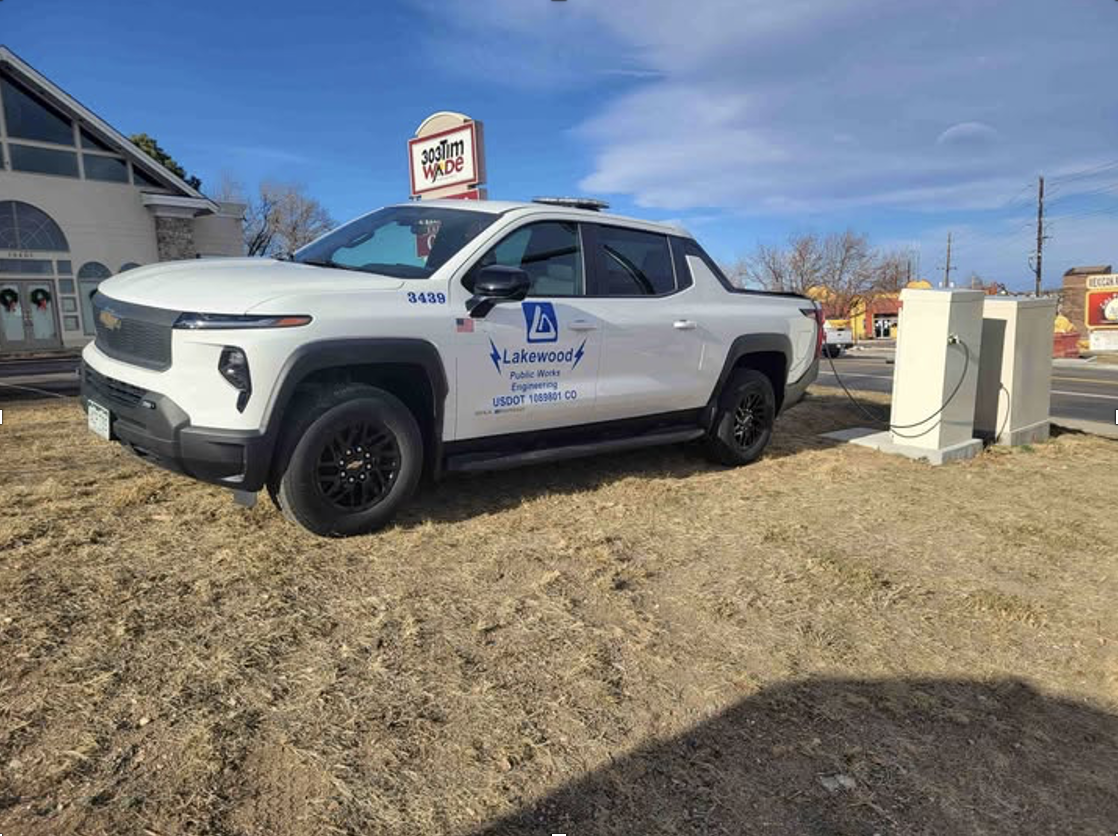
When the power went out in Lakewood, CO, back in December, the city’s Public Works crew did something you couldn’t have done a few years ago. They rolled up to an intersection in one of their new electric pickup trucks, a Chevy Silverado EV, ran a cable from the truck to the traffic signal’s controller – and kept the lights on.
No rumbling diesel generator. No flares or nervous four-way stop. Just a work truck that, when it isn’t hauling crews and gear, happens to carry a giant battery on wheels.
This is something a lot of people miss about electric vehicles. They tend to picture them as cars you plug in instead of fill up. But an EV is essentially a battery with wheels, and a battery doesn’t just take power in. It can push power back out – into your tools, your house, another car, or, yes, a traffic light.
Look at the kind of truck Lakewood used. The Chevy Silverado EV carries a battery pack of more than 200 kilowatt-hours and can send out up to 10.2 kilowatts of power through as many as 11 outlets, according to Chevrolet. That’s enough to run a contractor’s entire job site for days. GM says a properly equipped Silverado can even keep the essential parts of an average home running for up to three weeks, if you’re careful about how you use it.
Ford’s electric truck does the same trick. When Ford revealed the all-electric F-150 Lightning in 2021 – months after a brutal winter storm left more than 4.5 million homes and businesses in Texas without power – it made a point of showing off a feature called Intelligent Backup Power. With the right equipment installed, the Lightning can power an average American home, which uses about 30 kilowatt-hours a day, for roughly three days, or up to 10 days if you ration it.
All of a sudden, the truck in the driveway becomes the backup generator in the garage. (One safety note to keep in mind: This only works safely with an approved transfer switch, so you don’t accidentally send power down the line and endanger the crews working to restore it.)
Now here’s where it gets bigger than one truck and one house.
Think about the big yellow school bus. An electric school bus has an ENORMOUS battery, and it spends most of the day parked. It runs in the morning, sits all day, runs in the afternoon, and sits all night – often at exactly the hours when the electricity grid is most stressed. So utilities asked a clever question: What if those parked buses gave some power back?
The World Resources Institute reports that at least 26 utilities across 19 states are trying out this idea. In Beverly, Massachusetts, two electric buses sent more than 10 megawatt-hours of electricity back to the grid over a single summer – roughly enough to power 800 homes for a day. In Oakland, California, a school district plugged in 74 electric buses with two-way chargers and, in effect, built a small power plant out of its bus yard.
You don’t have to look far to see this in action. Durango School District 9-R already runs Colorado’s first vehicle-to-grid school bus, which since 2021 has charged on cheap off-peak power and can push electricity back through LPEA when demand spikes. Three more electric buses are on the way – set to use the same vehicle-to-grid technology – funded by a $900,000 state grant and due to start service in fall 2026.
That “power plant made of many small things” is the big idea, and it has a name.
When solar panels, home batteries, and EVs are scattered across a community and can feed electricity back to the grid, energy folks call them distributed energy resources, or DERs. “Distributed” just means spread out – not one big plant in one spot, but thousands of small sources sitting in driveways, garages, and parking lots.
Link a bunch of those DERs together with smart software, and you get a virtual power plant, or VPP. It’s “virtual” because there’s no smokestack and no single building. Instead, picture a thousand small batteries all responding to the same signal at the same moment, acting together like one big power plant. On a hot evening when everyone’s air conditioner is running at once, a VPP can pull stored energy from all those EVs and home batteries to keep the grid steady – no new gas plant required. As the energy news site Canary Media puts it, a VPP delivers electricity to the grid like a real power plant does, except its power comes from resources spread across a whole community. Imagine powering your A/C with your neighbor’s car.
Here in Southwest Colorado, this isn’t some far-off idea. Our local electric co-op, La Plata Electric Association, is led by CEO Chris Hansen, who earned his doctorate at the University of Oxford and spent years studying how to bring power to communities. Before he came to Durango, Hansen was a Colorado state senator. In 2024, he was a lead sponsor of Senate Bill 24-218, the law that wrote virtual power plants into Colorado’s rulebook and required utilities to build a program so customers’ batteries, EVs, and other devices can be paid for the power they send back.
Why should any of this matter to you? Because the cars and trucks rolling onto our roads are also the biggest batteries most families will ever own. Analysts have pointed out that EVs could become the most common energy resource of all, with combined battery capacity that dwarfs the nation’s nuclear plants. If we plug them in the smart way, the vehicle in your driveway won’t just take you to work – it can help keep your neighborhood’s lights on.
In Lakewood, that was just the first green light.
